

 Text Size
 Print
Print Email
Email
International News
- Text Size
- Print
- Email
One Country, Six Systems: Why Australian Courts Aren't Named Equally
One Country, Six Systems: Why Australian Courts Aren't Named Equally
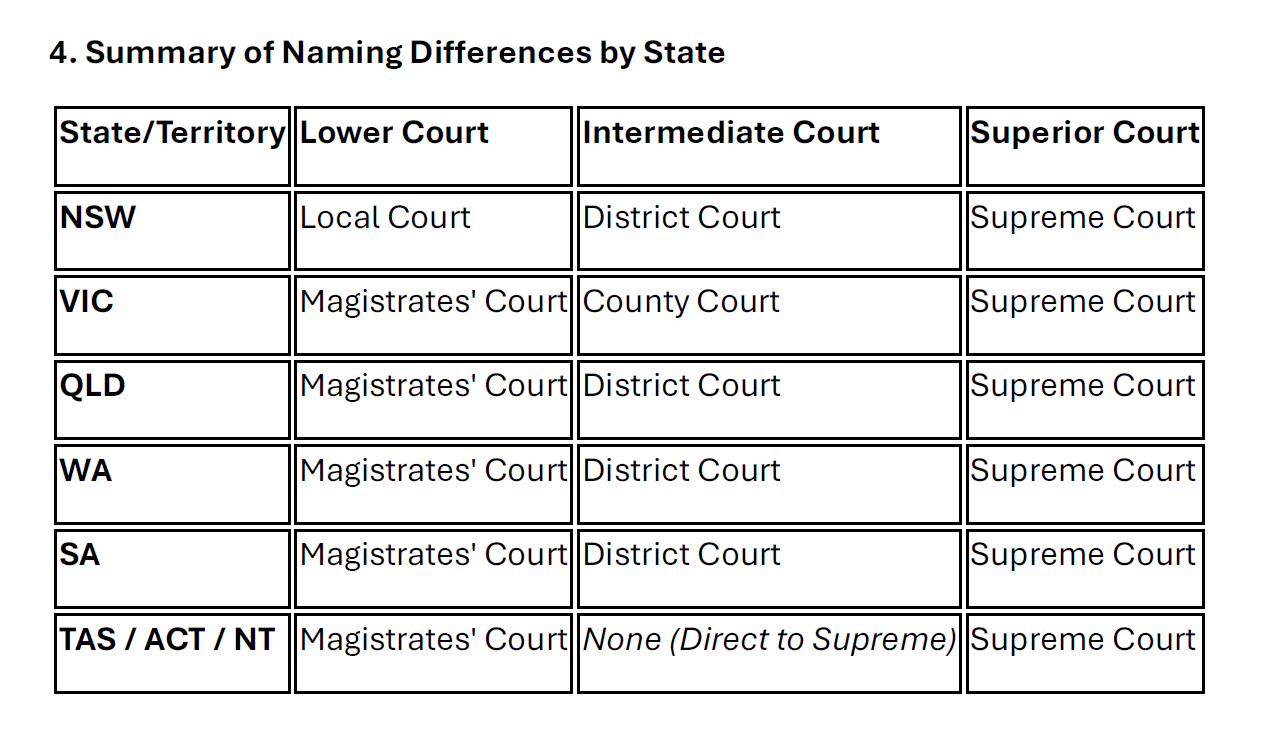
Australian courts have different names across states primarily because they were established as separate, independent colonial legal systems long before Australia became a single nation.
When the Australian colonies federated in 1901, they kept their existing court structures and names rather than creating a unified national system. This is why a "lower court" in Sydney is called something different than the one in Melbourne.
1. Colonial History and Independence
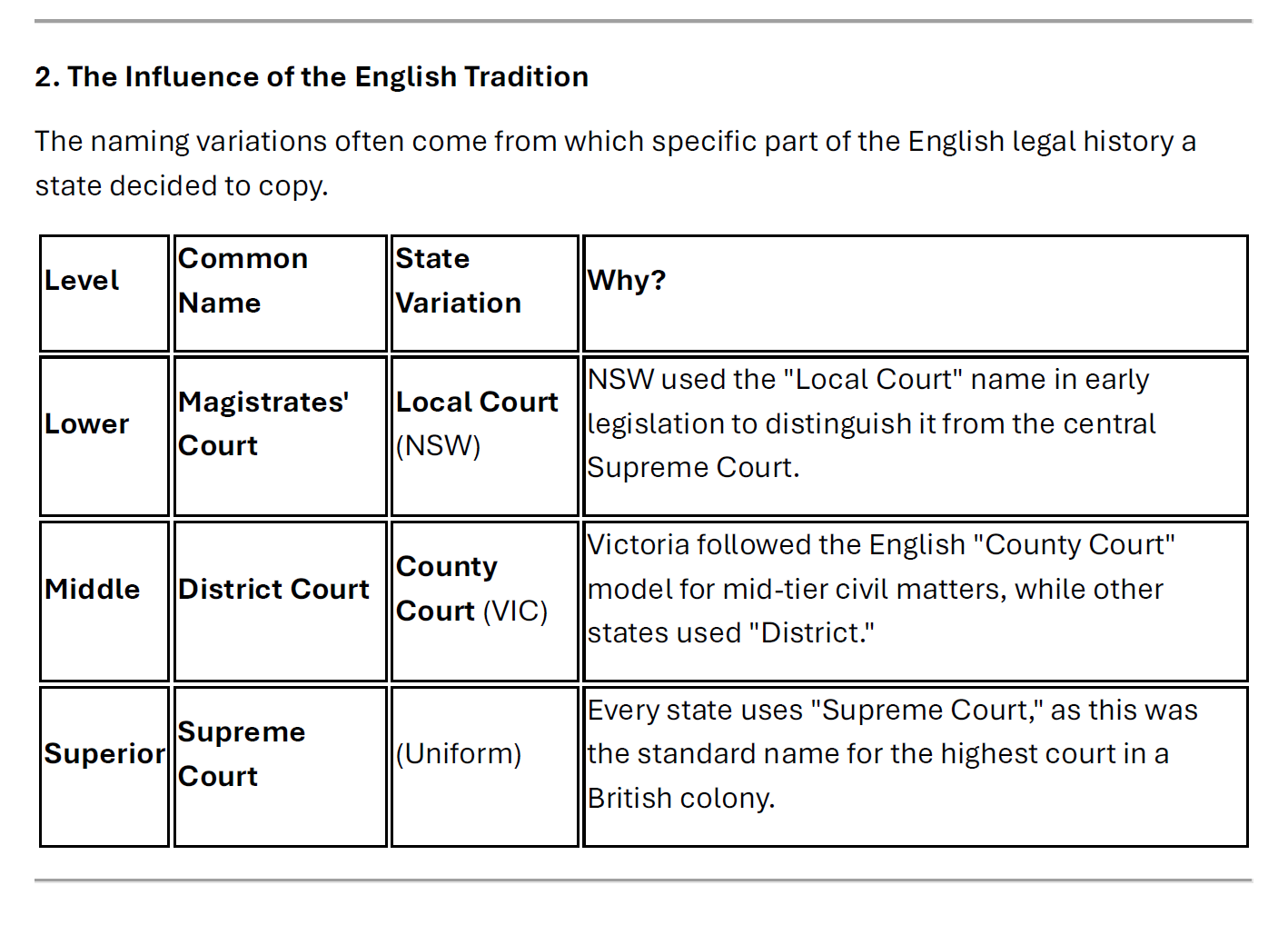
Before 1901, each Australian colony (like New South Wales or Victoria) was essentially its own "mini-country" with its own parliament and laws. They modeled their courts on the British system but often chose different titles based on the specific English traditions they wanted to emphasize or the legislation they passed.
- Example: New South Wales established a "Local Court," while Victoria and Queensland opted for "Magistrates' Court." Both perform the same function—handling minor criminal and civil matters—but the names reflect local legislative choices made over 150 years ago.
3. The Federation Compromise
When the Australian Constitution was written, the founders decided on a "dual" court system. Instead of the Federal government taking over all the state courts, they allowed the states to keep their own systems (State Jurisdiction) while creating a separate path for Federal matters.1
This preserved the "State Identity" of the courts. It also explains why Western Australia has its own Family Court of Western Australia, whereas every other state uses the Federal system for family law—WA simply chose not to hand over that specific power to the Commonwealth.

2026 The Background Investigator. All Rights Reserved.